Friday, October 03, 2008
Shanghai, China, 25-28 Sep 2008: Street Food
Cheap & Good
In Shanghai for a short trip. The street food is great, and prices are really kind to the wallet. My favourites are juicy Xiaolongbao and Shengjian - steamed and pan-fried versions of pork-filled dumplings. My best XLB experience was eating 32 of them at the Nanxiang Mantou shop in Yuyuan, Shanghai Old Town. There is invariably a long queue at the takeout counter of the famous shop. The counter cooks efficiently toss baskets of XLB into paper cardboard trays for the eagerly waiting and hungry customers. The queue moves relatively fast, but is interrupted by 10 to 15 minute spells of agonizing wait as fresh batches of XLB are steamed. Dining in the restaurant offers more variety, but at much higher prices. Wujiang Road, near Nanjing West Road, has a busy food street. Crowds form quickly at 2 popular stalls - Xibeilang Barbecue Shop and Xiao Yang Fried Dumplings. The barbecue meat is spicy and deliciously moist. Yang's Fried Dumplings, Shengjian, are said to be Shanghai's best. Prepared fresh, the hot juicy soup filling bursts out unexpectedly as you take the first bite. I squirted some on my shirt. However the taste more than compensates for the minor sartorial mishap. |


Monday, March 10, 2008
Beijing, China, 2 Mar 2008: The Great Wall DIY
To Badaling By Public Bus
I was determined to visit the Great Wall on this, my third business trip to Beijing. Discouraged by horror tales of tours with time-wasting (and expensive) shopping stops, Joey and I decided (or rather I decided and Joey, suffering an impending flu attack and bravely battling the cold weather, reluctantly followed) to take the public bus to Badaling. It is possible, and in fact rather easy, to do-it-yourself. Here's how: 1. Take the subway to the Line 2 stop, Jishuitan (2RMB). Get out via exit B. 2. Either walk about 10 minutes to Deshengmen (you should be able to see this large fortified ancient gate structure, much like the Qianmen, in the distance) or take a short 3-minute 10RMB taxi ride (inform the driver you are going to Badaling). Ignore the modern bus terminus building along the way. 3. Join the queue for the large green and white long-distance 919 public bus. Check with the driver or conductor that the bus goes to Badaling (if necessary, print out the Chinese script 八达岭). Some 919 buses go only to Yanqing - a town just short of Badaling (why the bus company does not use another number is unfathomable). To add to the confusion, there are other city 919 buses that do not go to Badaling - these start from the afore-mentioned bus terminus. Ignore these. 4. There are express and regular 919 buses to Badaling. The former does not stop along the way, takes less than an hour for the journey, and are all scheduled to depart Deshengmen station before 1130h. The latter takes about 1.5 hours, making several stops along the way, but runs throughout the day. The fare should cost 12RMB on either bus. 5. The buses may depart from the bus bay behind Deshengmen, or from one across the road. Go up the bus to ask the driver or conductor. Do not worry if you miss the bus. There should be 2 or 3 departures every hour. 6. DO NOT BELIEVE ANYONE who tells you there are no more buses to Badaling. They are private bus or taxi touts who want to part you with your RMB. These cheats quote exorbitant fares (e.g. 80 RMB return on a bus). Sometimes, instead of Badaling, you may be brought to Juyongguan, a small Disney castle-like section of the Great Wall between Yanqing and Badaling, without the grand sweeping vista of the latter). Worse, the driver may demand more fare midway through the journey. DO NOT BELIEVE the officials at the information counter also (I suspect they are in on the conspiracy with the touts). BELIEVE ONLY the bus driver and/or conductor on the bus. 7. Be prepared for very crowded buses. It should not be a problem getting seats from Deshengmen, but the bus will be VERY packed on the return trip (at least until Yanqing) as the bus will have picked up passengers from stops farther than Badaling. 8. The last bus leaves Badaling station for Beijing at 1730h. Allow 2 to 3 hours for the Great Wall, and try to avoid rushing for the last bus. (I left Deshengmen at 1300h and returned by 1900h.) Again, DO NOT BELIEVE ANYONE who tells you there are no more buses back. The entrance fee for the Badaling Great Wall is 40RMB. It takes 2 to 3 hours to scale and descend from Haohancheng, the peak of the North Wall (880m above sea level, the 8th of 12 tower stations along this stretch). The South Wall is shorter but steeper in parts, and therefore less popular. While the Badaling Great Wall has been extensively reconstructed (unlike the raw wilderness at sections of the Great Wall at Simatai and Mutianyu), the grand expanse of the wall snaking up and down the surrounding rolling hills is nevertheless breathtaking. The ascent (and descent) requires considerable stamina. If fitness is an issue or time is limited, consider taking the cable car ride (40RMB singe or 60RMB return, last ride at 1600h) to the peak at the 8th station of the North Wall. The cable car entrance is different from the Great Wall entrance (about 1000m apart) - just follow the signs. There are more subway lines being built. By the Summer Olympic Games 2008, there should be a subway stop at the Badaling Express Bus Station (as well as another stop at the Summer Palace). Hopefully, the journey to Badaling will be less traumatic - if only they can clamp down on the scams. |
Labels: antiquity, architecture, Beijing, China, nature, transport, trekking
Sunday, March 09, 2008
Beijing, China, 29 Feb-2 Mar 2008: 老百姓
Common Folk
Less than 6 months to the Summer Olympic Games, Beijing is a hive of construction activities. In the Forbidden Palace, scaffoldings clad the 3 Great Halls, and modern slate tiles replaces uneven stone slabs gouged out from the ancient hallowed squares. Large parts of the traditonal Dazhalan quarters near Qianmen and hutongs adjacent to Wangfujing Street have been systematically torn down, their detritus shielded by giant billboards promising urban revitalization of meretricious appeal. The hoi polloi, 老百姓 Lao Bai Xing, soldier on bravely, immutable in the sea of change swirling around them. Guards at the Forbidden Palace shout at tourists who linger too long on the bridges leading to the south entrance. Hungry customers jostle to buy their lunch orders of steamed buns Xiao Long Bao. Intrepid office workers brave the jungle of commuters on the subway and public buses. Brusque security guards patrol the busy warrens of shops selling luxury knockoffs in the Silk Street Bazaar. Life goes on. Amid the rush, there is time for reflection. Monks and nuns take in the sights at the Forbidden Palace, sharing in lunchtime victuals on the benches outside Qianqinggong, the Inner Palace. In Beihai Park, enthusiasts huddle together and sing heartily to violin accompaniment on a crisp late winter Friday afternoon. A solitary man carefully wields a large water brush over the pavement, his ephemeral writing drying up and disappearing with the angled rays of the setting sun. |
Labels: Beijing, China, garden, lake, palace, people
Friday, August 10, 2007
Changsha, China, 1 July 2007: Flight CZ6306
Long Day's Journey Into Night
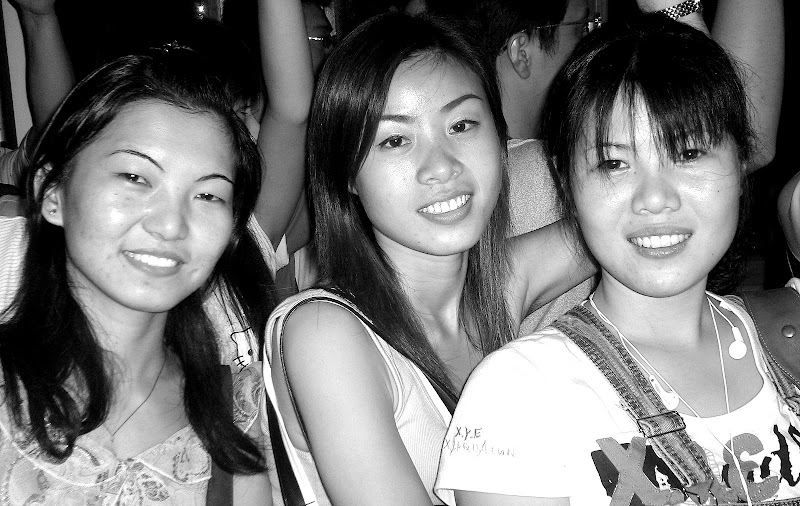 H - young, petite, in a skyblue singlet with loud silvery glittery swirling letters emblazoned on the bosom, and matching eye shadow - asked me how long I had been waiting. Too long. China Southern Airlines flight CZ6306 was to have taken off an hour ago at 2:30 pm from Shenzhen Airport, bound for Wuhan, then Shenyang. But there was no sign of the plane. Neither official updates nor explanation materialized. A rumour went around: CZ6306 was still stranded at Zhuhai Airport due to bad weather. Turned out to be true. Bad luck. Well maybe not too bad after all. Zhuhai was less than an hour away. H - young, petite, in a skyblue singlet with loud silvery glittery swirling letters emblazoned on the bosom, and matching eye shadow - asked me how long I had been waiting. Too long. China Southern Airlines flight CZ6306 was to have taken off an hour ago at 2:30 pm from Shenzhen Airport, bound for Wuhan, then Shenyang. But there was no sign of the plane. Neither official updates nor explanation materialized. A rumour went around: CZ6306 was still stranded at Zhuhai Airport due to bad weather. Turned out to be true. Bad luck. Well maybe not too bad after all. Zhuhai was less than an hour away."You don't sound local." "I am from Singapore." "You speak so softly and care-ful-ly. I can barely grasp what you are saying. Is this how Singaporeans speak?" "Not all. My Huayu is not vey good. I have to think very hard before I say something in Huayu," I stammered haltingly, sotto voce. "Huayu?" "Huayu. No?" Long pause. Broken only as understanding slowly dawned on H's face. "Ohhhhh. It's Guoyu. Or Putonghua. We don't call the Chinese language Huayu here in China." "That's, er, true," L nodded nervously in agreement. L possessed the gentlest of voices, cri du chat. Long hair pinned back squarely, unveiling finely-plucked eyebrows and bemused eyes that danced behind long narrow drawn eyelids, her quiet diffident air was made complete by a below-knee sun-dress with sea-green floral prints and floppy large collar that screamed girl-next-door. H was different - modern, vivacious, confident, spunky, the only one with make-up on. They had been utter strangers before they met at check-in but were now talking animatedly like old friends. Both were traveling by air for the first time. "I have a few days off from work. I am flying to Wuhan. My big brother is there. He's a hairdresser," intimated L shyly. "Isn't Wuhan very hot this time of year?" I queried in wonderment for I did not relish my own first trip to - and upcoming week-long conference in - Wuhan notorious for its oven-like summer heatwave. "It will be fine. I am so looking forward to seeing Wuhan again. I remember having a swell time when I visited with my family more than ten years ago, although my memory of the sights is now blurry. I was only a small child then," L's eyes twinkled, her excitement grew apace, undented by my thinning enthusiasm. "I shall be going onward to Shenyang. I hope the flight will board soon. With this delay, it will be very dark when I arrive," H intoned worriedly. And with sibyllic prescience, as we were all to find out. Flight CZ6306 arrived two hours late, accompanied by gathering glowering clouds and light rain. We met M in the flight boarding queue. M, with the sad doe eyes and tired beautiful face, was in a tee-shirt and a matronly overall top. She too was flying for the first time. To Shenyang to meet some friends there for a holiday. Bound by their common predicament and situation, H, L and M broke into easy chatter. "I should have taken the train. It's way cheaper. At least I know when I will actually arrive," M rued, her plans in limbo. "No way. It's more than thirty hours by train to Shenyang. I am almost sure we shall be in Shenyang in but a few hours," H injected wishfully, albeit with little conviction. Sheep-like we filed into the plane, glad to be going somewhere finally. Almost 6 pm. From my window seat, I thought I could see the intersection of the Yangzi and Hanshui Rivers. They divide Wuhan, the capital of Hubei province, into three parts: Hankou, Hanyang and Wuchang. I hurriedly studied my notebook for details of how to make the long journey by bus from the airport to my destination: Bahaolou, Huazhong University of Science and Technology, Wuchang. My thoughts were jolted suddenly by the pilot's announcement. Due to heavy thunderstorms in Wuhan, it was too dangerous to land. The plane had to turn around from the city and detour to Changsha. "WHAAAAT!" the passenger cabin exploded in spontaneous collective protest. Changsha was in another province, Hunan, almost one-third of the way back to where we started off - this I quickly discovered to my dismay, flipping furiously to the map section of the inflight magazine. Hands shot up, voices were raised, children cried. The toddler seated behind me had to go to the loo. Number 2. "Too bad, no can do," was the stewardesses' brusque business-like brush-off. Illumined by the dying rays of the setting sun, Changsha's verdant hills, rice paddi fields and mirror-like lakes looked serenely beautiful from the air. Huanghua airport was, in contrast, drab and cheerless. I searched for and found H, L and M huddled together on a row of chairs, eating Niushifu brand beef-flavoured instant cup noodles. The 8 RMB noodles were overpriced, but were the only food available. Ubiquitous boilers dispensed hot water for cooking the noodles. "Hi. Sit down here," H patted on the seat beside her. "Have one of these." I sat down, accepted her proffered savoury snack, peeled away the tacky plastic wrapper and nervously bit into an anonymous thin slab of spicy saltiness. "Duck's tongue. Local specialty produce. Very good," H volunteered in quick staccato, before turning back to continue her conversation with L and M. She was showing them photos of her colleagues taken that morning, the final day of her job. The last two years, she had worked in a Shenzhen shop, selling cosmetics, 9 am to 9 pm daily, one day off a week. It was a good job, better-paying than the factory work she did previously. Nevertheless, she wanted to move on to better things. She resigned from her job, packed her bags, stuffed her hand luggage with expensive cosmetics, and was traveling to Shenyang to meet a friend. If things went according to plan, they would set up a business there to sell cosmetics. Youthful brashness, but impressive self-assuredness. "I make these," L pointed at my backpack. She worked in a factory making branded backpacks for export. No, she could not afford the expensive bags she made. Neither were they available for sale locally. "I make these," M pointed at my shoes. She too worked in a factory. Making branded shoes for export that she could not afford were they sold locally, which of course they were not. Deja vu. One and a half hours into the wait, China Southern Airlines mustered up packed dinners for us stranded passengers. We supped joylessly on rice, shreds of oily cabbage and meatless hog bones. It was scant comfort for our growing frustration. 10 pm. News broke that the weather in Wuhan was clearing. A boarding announcement was made. Hurrah! Ecstatic beyond belief, H, L, M and I eagerly went through the perfunctory identity and ticket checks, and walked, almost bounced, to the waiting bus on the tarmac. Squeezed into the bus, we were quickly ferried to the waiting plane. There was another one hour's wait in the plane. In the meantime, two other planes flew off to Wuhan. Our pilot said we had to wait to see if these earlier planes could actually land before we set off. "WHAAAAT! AGAAAAIN!" the passenger cabin exploded in spontaneous collective protest. Again. Murmurings of passenger mutiny grew louder and louder. Invectives were hurled at the hapless stewardesses, who ploughed up and down the aisle with stern grave expressions, doing nothing useful really. ARRRRGGH! Nonplussed with bewilderment, I was by now numb to everything around me. I just hoped for an end to the lugubrious ordeal. Around 11 pm, our plane took off. How much the decision was instigated by vocal passenger insistence, I did not know. If we had waited any longer, the aircrew would surely have been lynched. I dared not think about whether the decision was a safe one. The plane landed in Wuhan around midnight, eight hours late. The weather was eerily calm: wet glistening runways and scattered damp drizzle the whimpering vestiges of the foregoing thundering malevolence. Zombie-like, I collected my luggage and exited the airport. Luckily there was a waiting bus to Wuchang's Fujiapo bus terminus. I bought my 30 RMB ticket, deposited my luggage in the trunk and boarded the bus seconds before it moved off. The bus sliced effortlessly through the thick darkness of the Wuhanese night, on roads almost empty of traffic. The first stop was Hankou railway station. As the bus started to slow down near the stop, I felt a hand brush lightly across my shoulder. "Hope you have a good time in Wuhan. Bye," L purred softly. Her body, back-lit against the glaring suddenly-switched-on lights on the bus, flitted past me and floated to the front of the bus to get off. I could barely make out a shadowy silhouette in front of her. Her brother, surely. As the bus pulled away from the stop, and their figures slowly receded and finally disappeared from view, I felt I had lost something. I never got to know their names. It had not seemed necessary. Then. 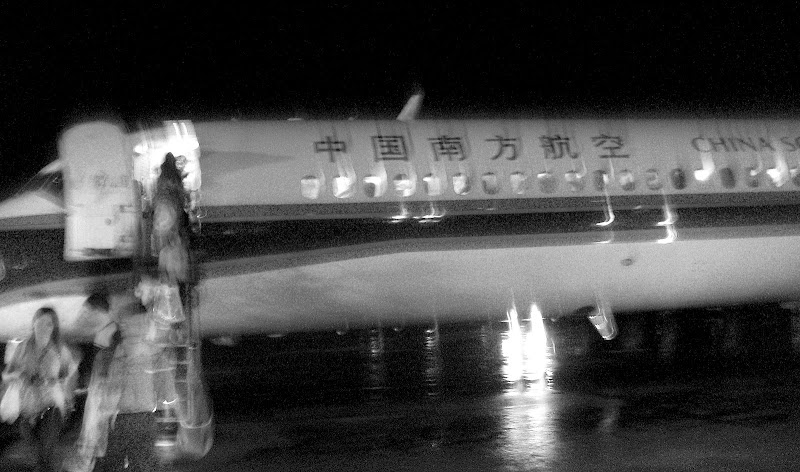 |
Labels: China, ladies, people, transport
Sunday, July 09, 2006
Beijing, China, 16-19 February 2006: Imperial Palaces
Forbidden Palace & Summer Palace, In Winter
  The Forbidden Palace was the seat of Qing dynastic rule for over 400 years. Guardian lions and fantastical rooftop beasts stand in perpetual vigil, casting magic protection over the Manchu emperor and his royal retinue. Emperor Qian Long reigned 60 years. His calligraphic inscription Zheng Da Guang Ming - Incorruptible Righteousness - hangs above his throne. 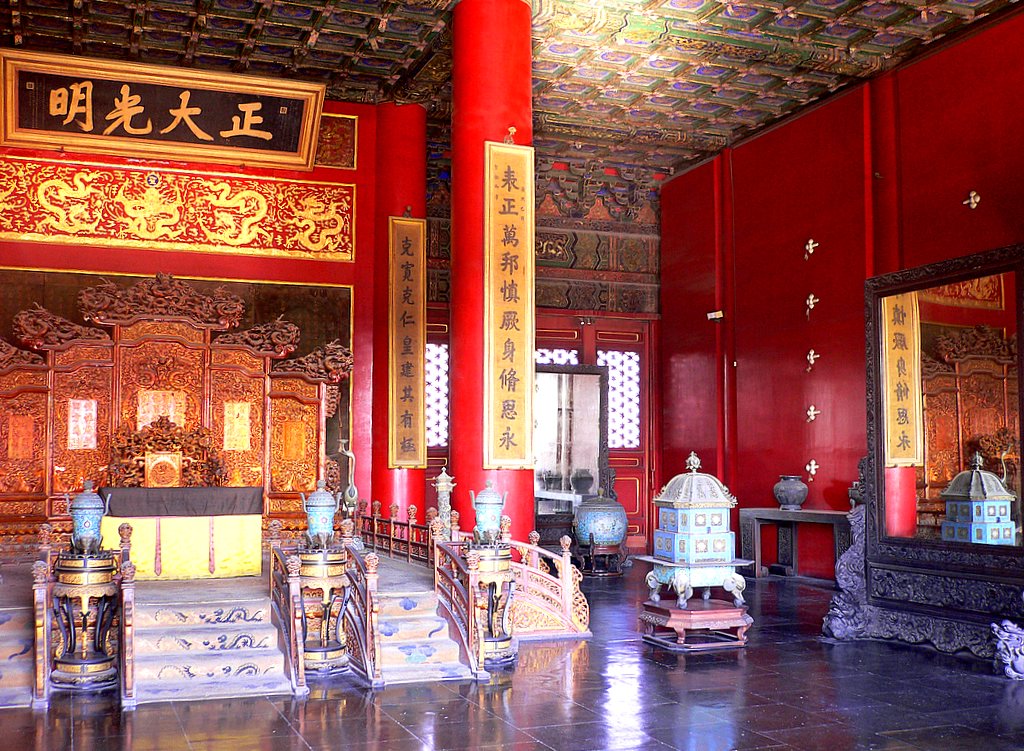 |
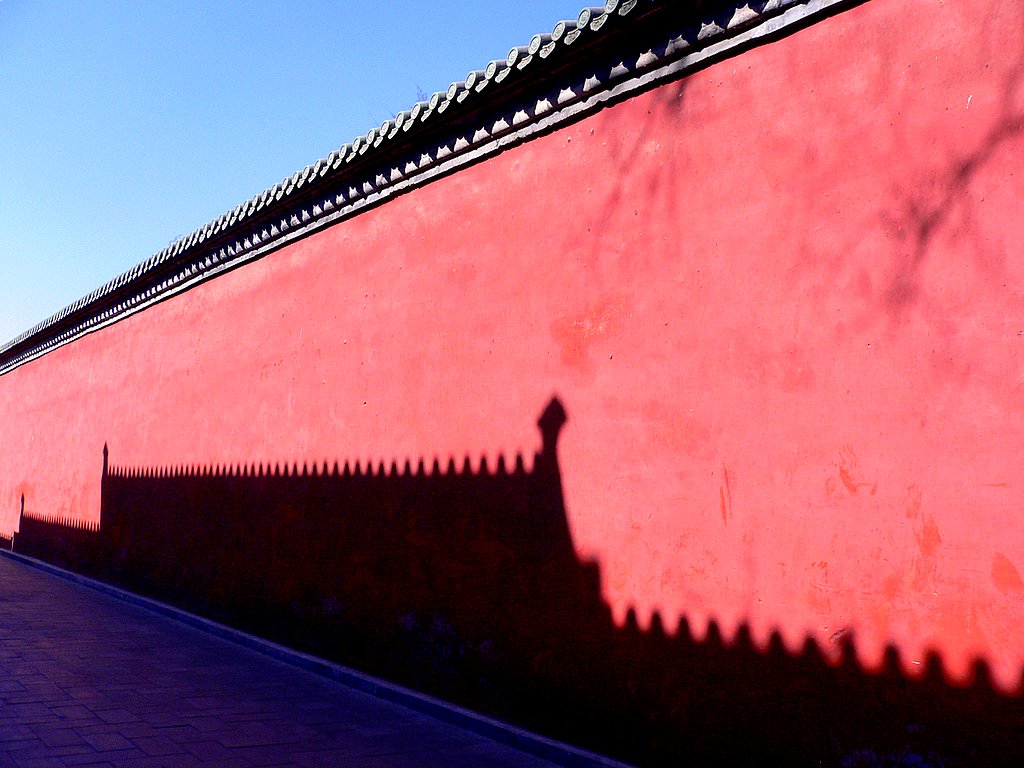 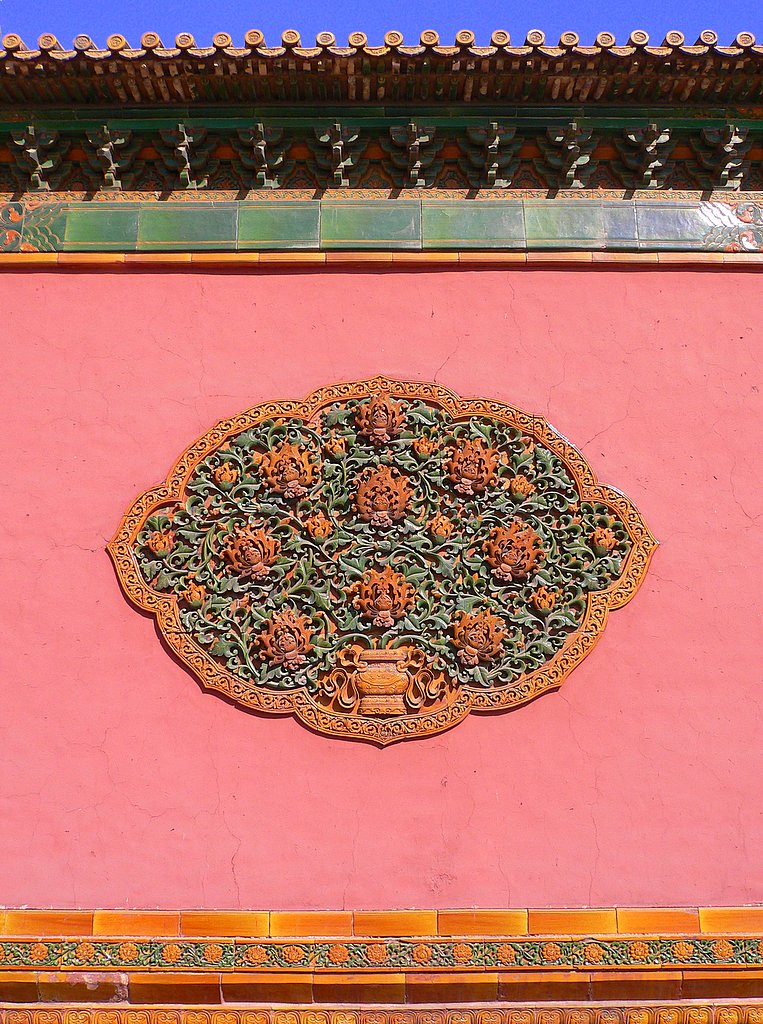 Believed to ward off evil charms and spirits, auspicious red is everywhere. Palace walls and courtyard gates are coated in burnished crimson hues. Delicate ceramic tiles with recurring floral peony motifs adorn walls and columns. 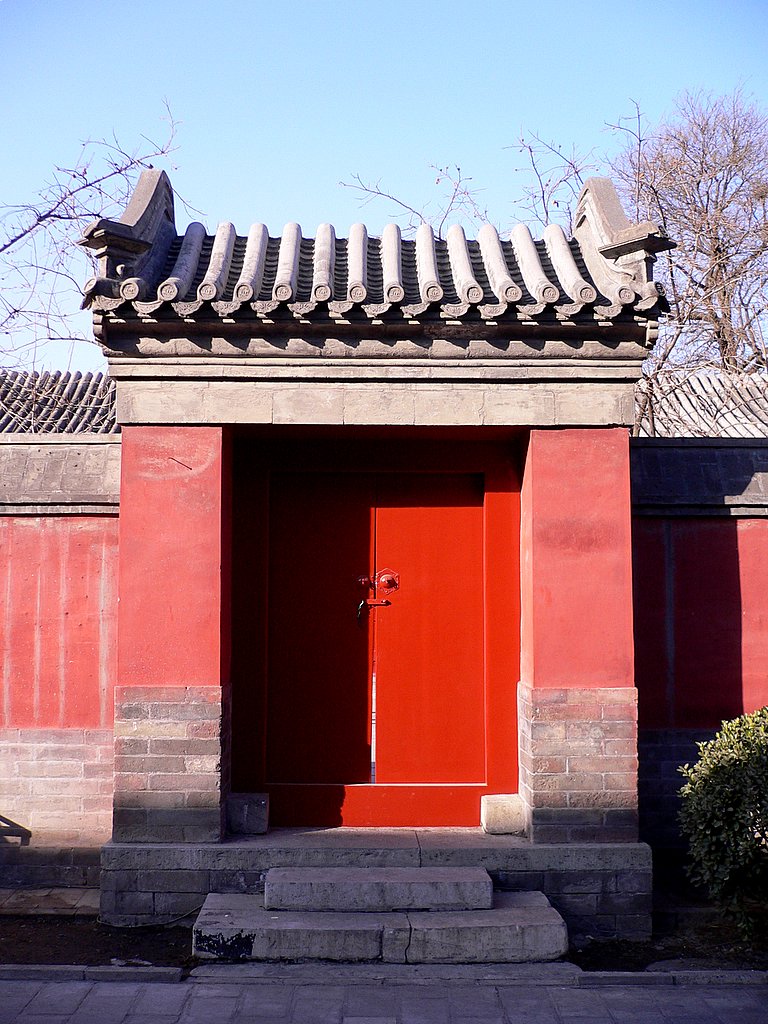 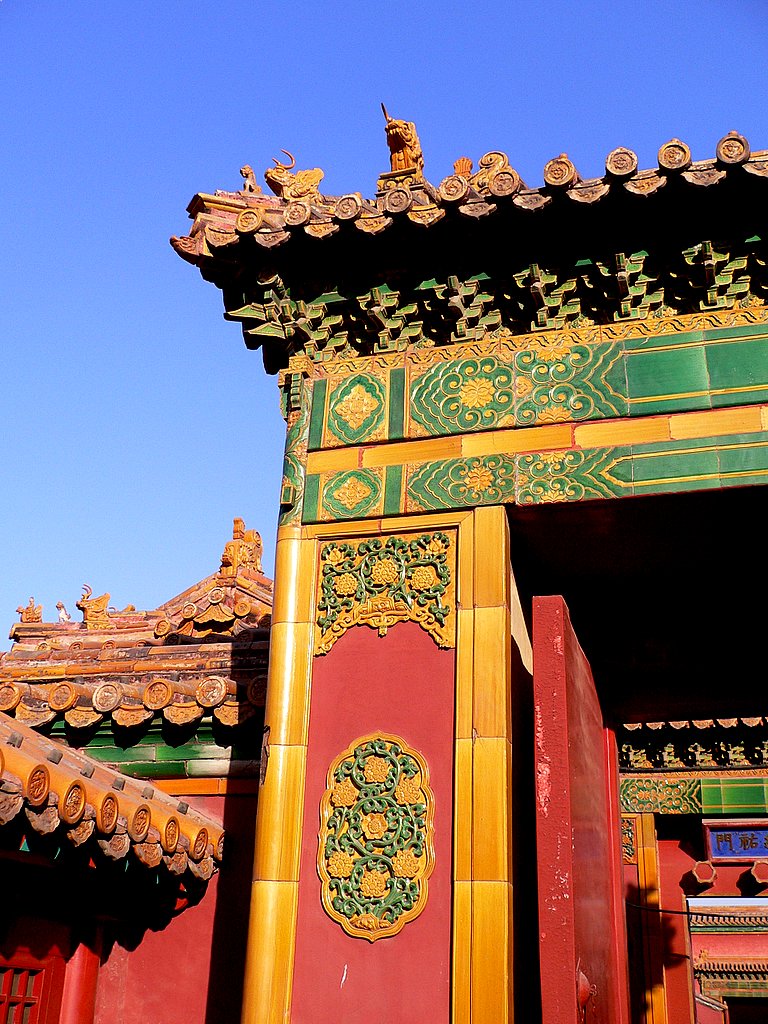 |
  The Imperial Garden, behind the royal palaces, edges the northern palace wall. Within its compact compound, stylized rock sculptures, miniature pavilions and countless ornamental trees, centuries old, are meticulously laid out, no doubt after strict Feng Shui principles. |
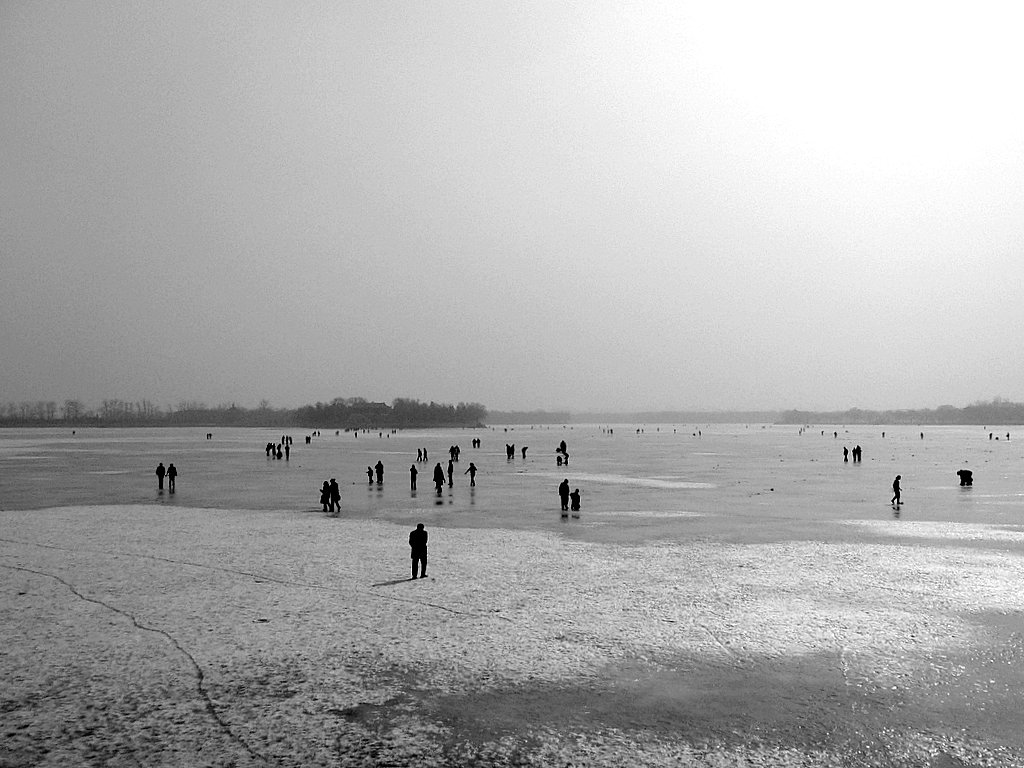
 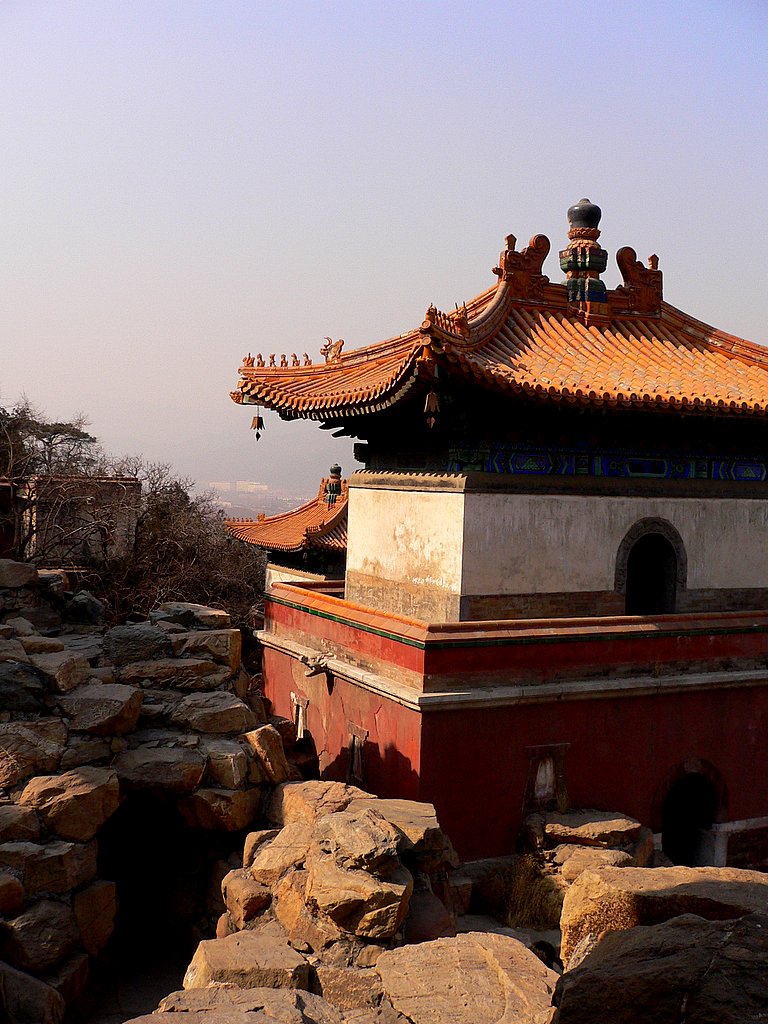 The Summer Palace, Yi He Yuan, was rebuilt following Western army ruination, using war funds expropriated by the infamous Empress Dowager Ci Xi. It became her summer Xanadu. Palaces were erected on Wan Shou Shan - Longevity Mount - and on the banks of Kunming Lake at its base. Temples built for imperial religious edification dot the landscape. Times have not been kind. Beheaded Buddha statues are scarred reminders of zealous cultural purification in the 60's. 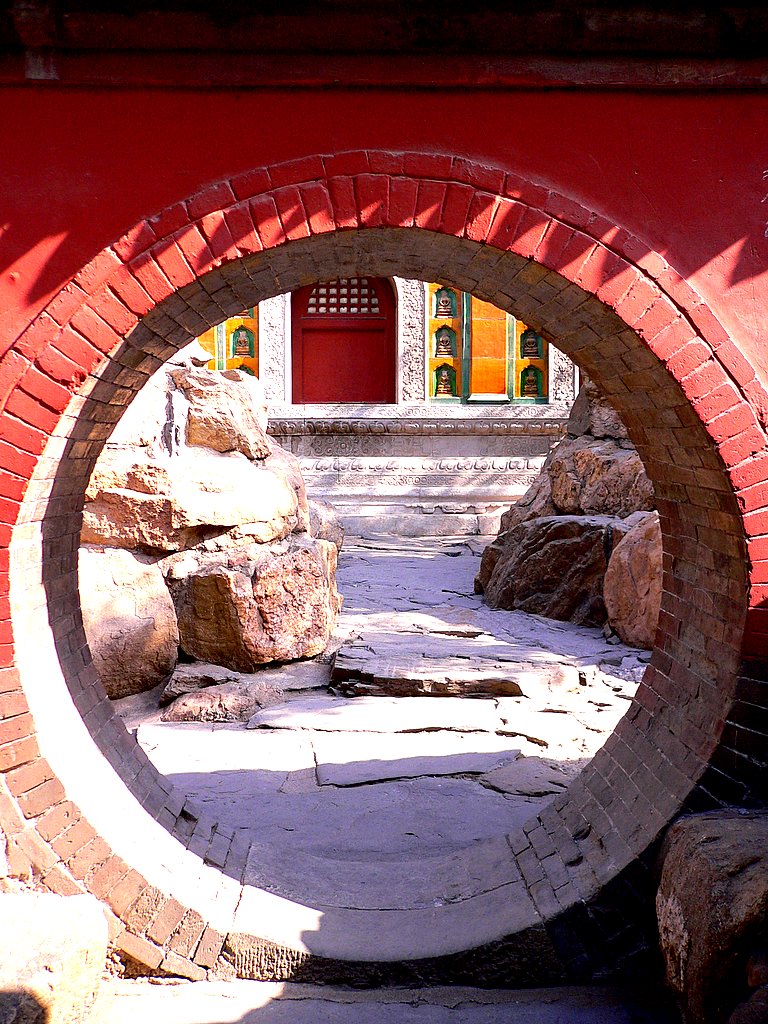 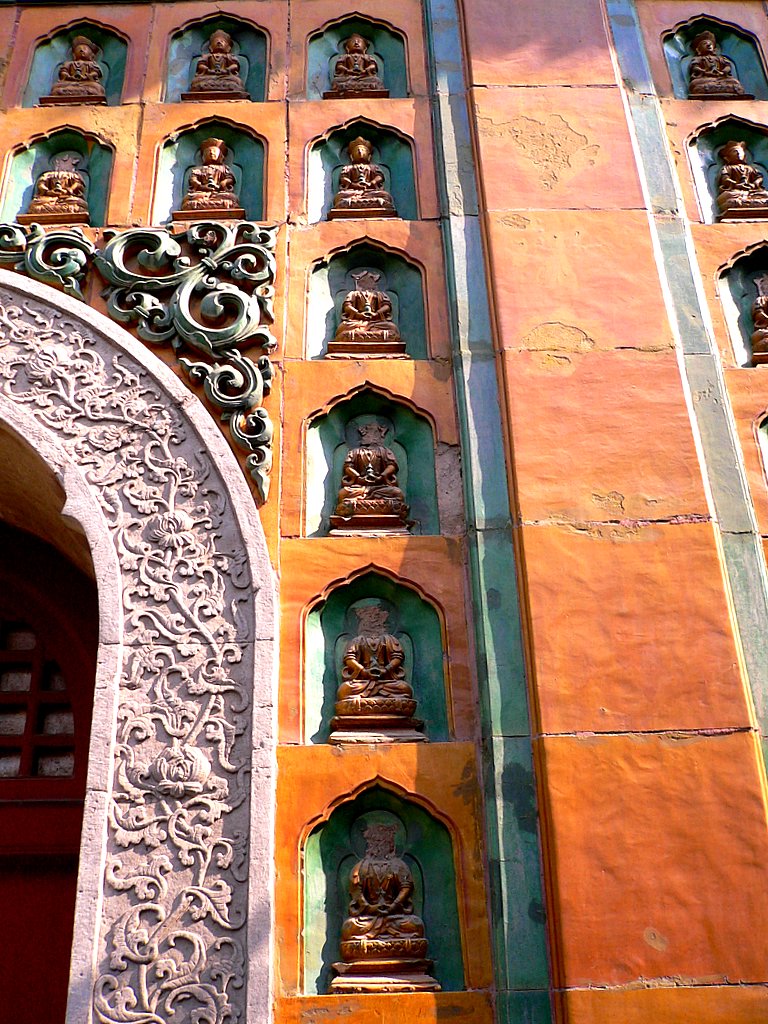 |
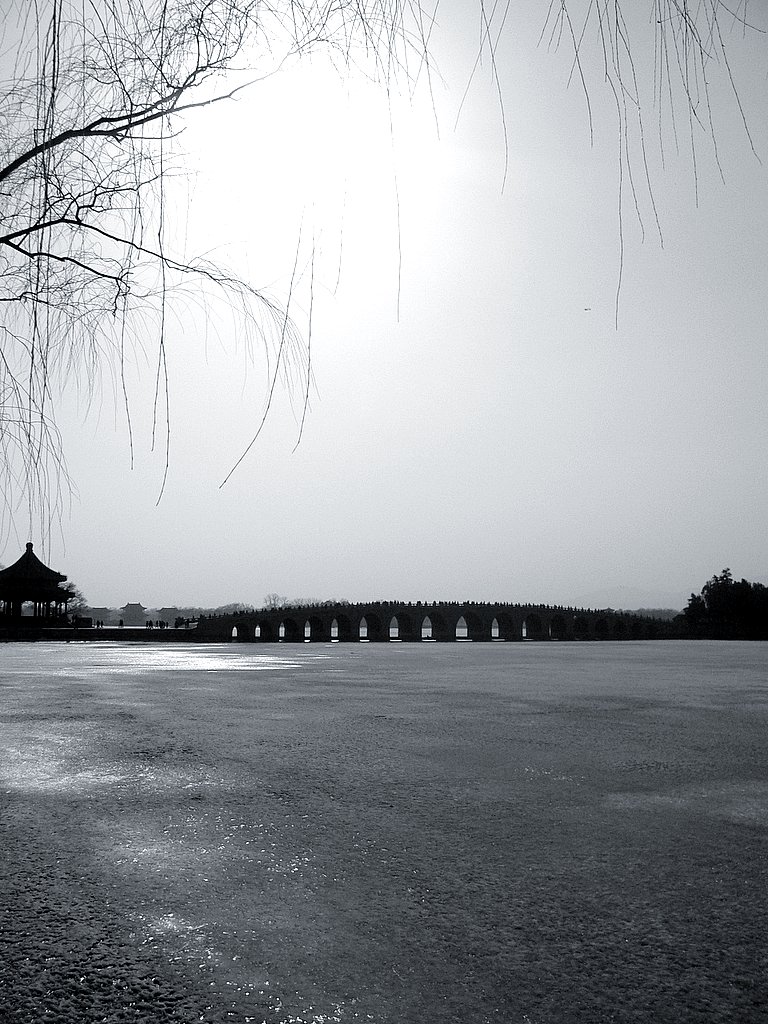    |
 A long gallery Chang Lang connects the pavilions ringing Kunming Lake. Strolling, I chance upon these women playing cards. With impenetrable quiet concentration. |
Labels: Beijing, China, history, lake, palace, religious site

Licensed under Creative Commons Attribution-NonCommercial-NoDerivs 2.5 License

These are the 30 countries that I have ever set foot on. Airport stopovers don't count!