Saturday, April 07, 2007
Barcelona, Spain, 31 Aug - 7 Sep 2006: La Sagrada Familia
Gaudi Gothic
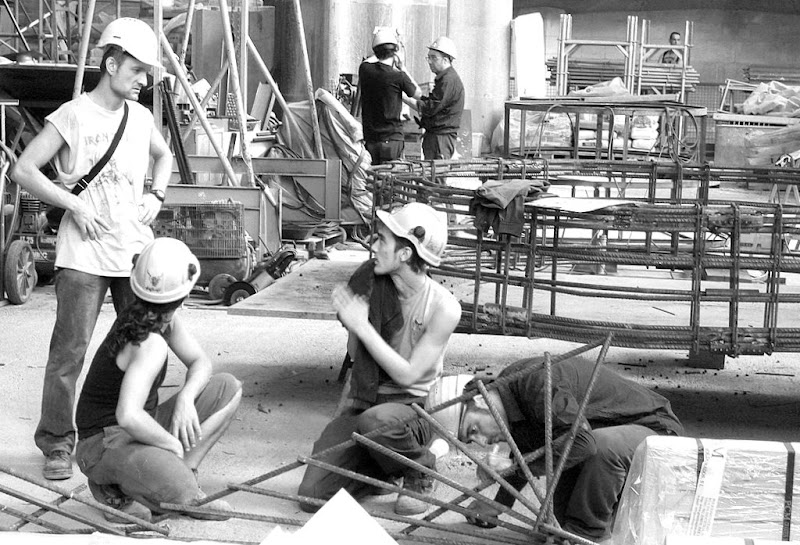 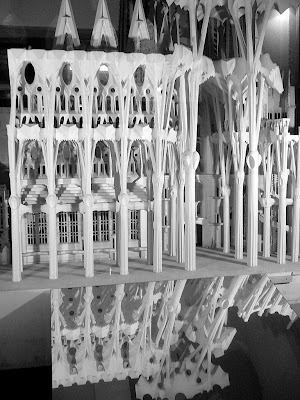 |
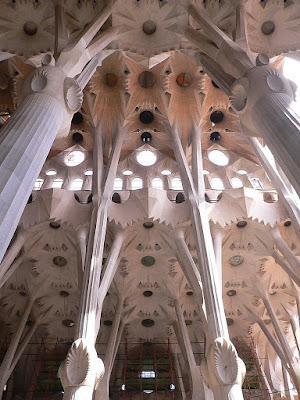
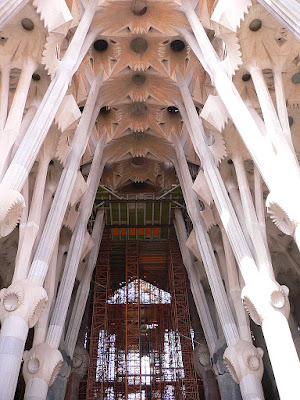
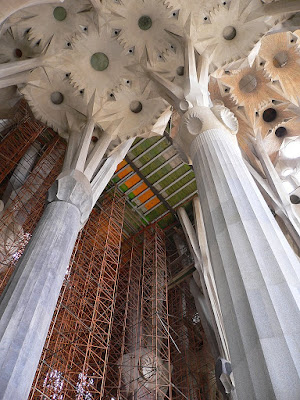
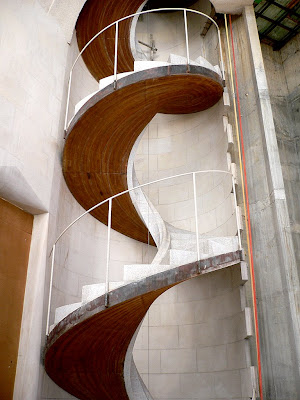
| Antonio Gaudi dedicated the last years of his life to building La Sagrada Familia, his towering vision of the Holy Family and the Apostles in concrete. Eighty years after his death, Gaudi's masterpiece is still very much a work in progress. Construction of the central nave continues apace -the finished nave but a model in the underground Gaudi Museum - as awed visitors tread the grounds of the Church, solemnly tracing the Modernista pilgrim trail. |
   |
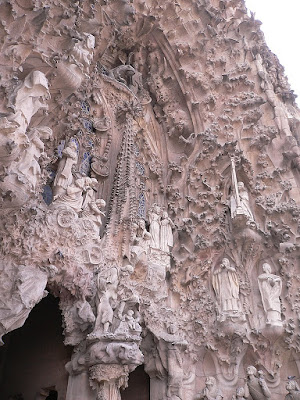
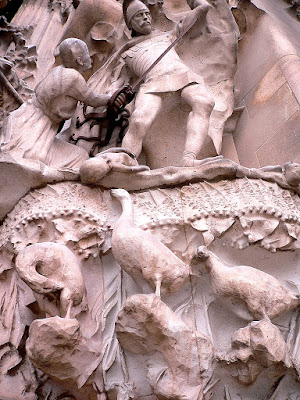
| The Nativity Facade is a signature Gaudi original. Hate it ("wedding-cake-in-the-rain") or love it, the facade overwhelms with its grand scale and undulating surfaces dripping with foliate ornaments and myriad details - Gaudi's evocation of the rococco. |
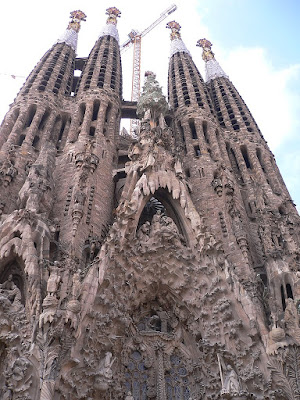   |
| In contrast, the modern Passion Facade is angular and spare, but nevertheless powerful. The Glory Facade, soon to be finished, will add to the apparent disparateness of the Church, yet strangely augmenting the whole. |
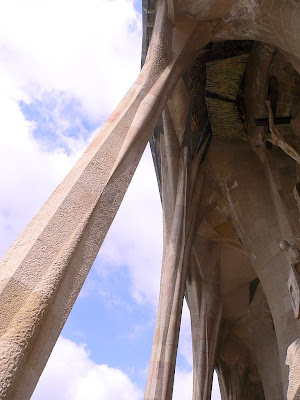 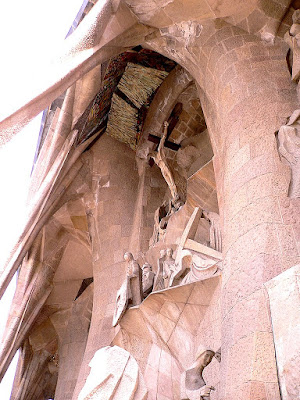 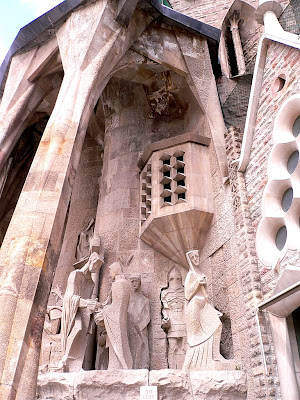 |
| Unifying the different styles are the models on which Gaudi based his designs. Using curves, arches and hyperboloids, he conceived a new universe of pure geometric building forms - transcendent gaudiness that underscores the architectural genius and legacy of the man. |
 |
Labels: architecture, art, Barcelona, museum, religious site, Spain


Sunday, April 01, 2007
Barcelona, Spain, 31 Aug - 7 Sep 2006: Sardana
Catalan Circle Dance
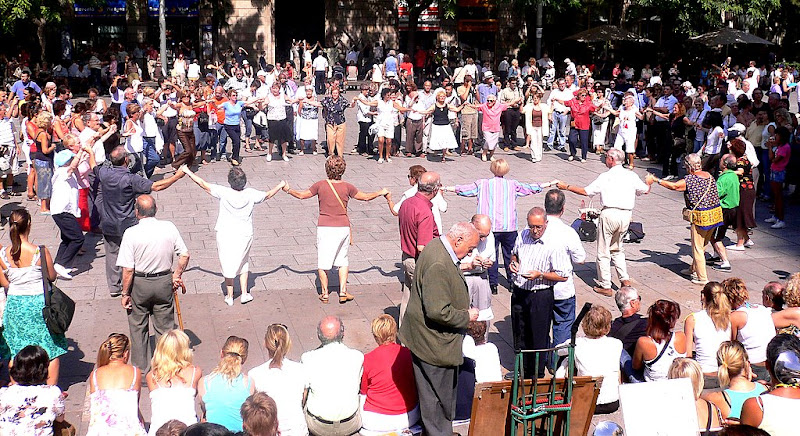 |
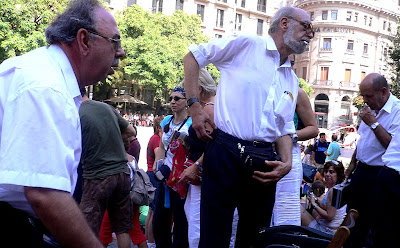
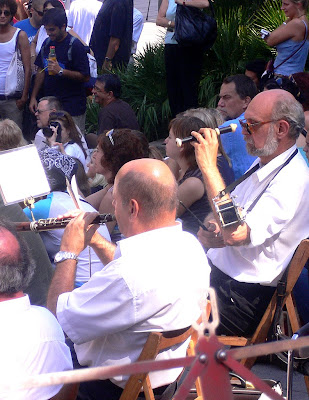
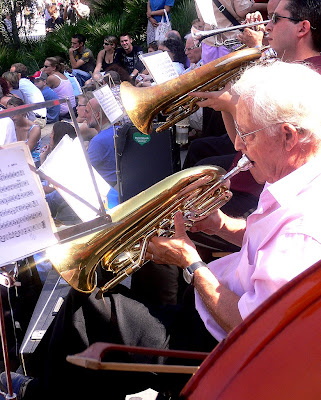
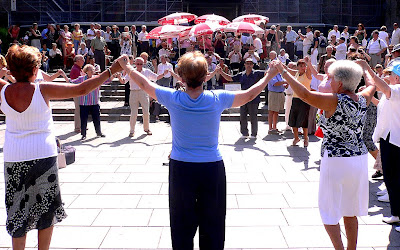
| A world removed from Spanish flamenco, Sardana - Catalonia's languorous folk dance - is the political symbol of Catalan solidarity and pride. On weekends, Sardana aficionados gather at Barcelona's Barri Gotic, eagerly waiting as the cobla, an amateur orchestra of usual brass as well as some other unusual instruments, gets ready. The cobla leader, a feisty silver-bearded gentleman, plays the piccolo-like flaviol to signal the start of the dance. |
   |
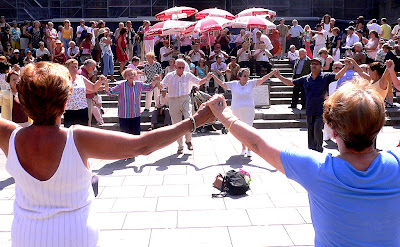
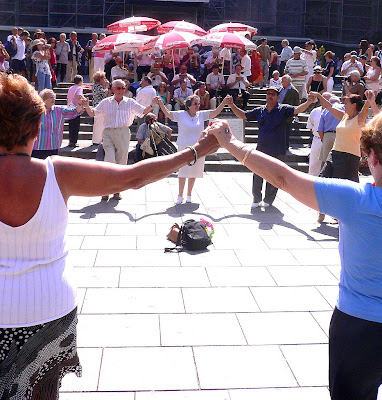
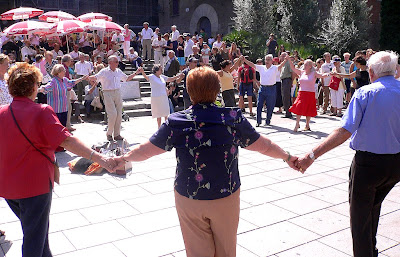
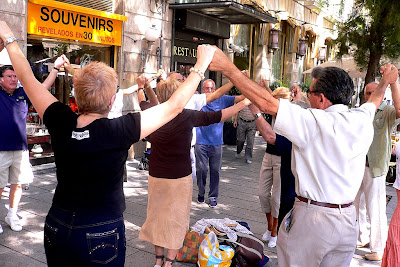
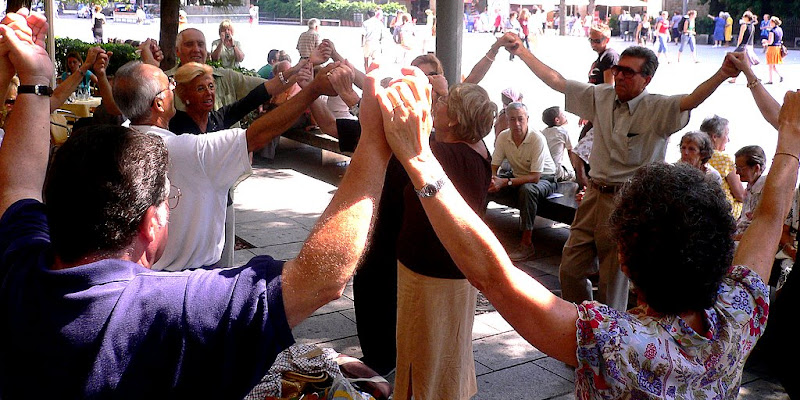
| As the music swells, dancers link hands to form circles. These gradually enlarge as more people join in. Feet point, hop and skip in tandem to the repetitive shrill declamations from the band, responding with gusto and inborn instinct to the music's abrupt rhythmic punctuations. Deceptively simple, the dance steps can be tricky for the uninitiated. Notice the series of short steps, then a big sidestep to the left, and the long steps after the thematic transition. |
    |
| At the periphery of the main ring, dance connoisseurs form exclusive tight rings. Brows knitted, eyes closed, foreheads uplifted and toes pointed, they celebrate the apotheosis of the Sardana spirit, dancing beautifully in perfect unison. For them, Sardana is religion. Novices are brusquely brushed off. Be warned. |
  |
Labels: Barcelona, dance, music, people, religious site, Spain
Sunday, March 25, 2007
Seville, Spain, 23 Feb 2007: Real Alcazar y Catedral
Mudejar Palace And Gothic Church
  |
| The Christian monarchs Alfonso X and Pedro I (the Cruel) employed Moorish artisans to build the Real Alcazar in the 14th century. The latter allegedly abandoned his wife, preferring to cavort with his favourite mistress in his new pleasure palace. The Alcazar houses fantasy courtyards like the Patio de las Doncellas and delightful gardens that combine a curious blend of Moorish and European influences. It remains the most complete and well-preserved specimen of Mudejar architecture in Spain. |
  |
| Seville Cathedral is the world's third largest cathedral (after Vatican's St Peter's and London's St Paul's) and largest Gothic cathedral. Built on the site on a former mosque, only the minaret - refashioned as a bell tower La Giralda - and the orangery at the entrance remain. Climb up a seemingly endless series of ramps (designed to allow passage of sentries on horseback) to get to the top of the Giralda. From there, enjoy panaromic views of the massive naves of the Cathedral, the nearby Real Alcazar and the traditional dwellings of barrio Santa Cruz. |
 |
Labels: architecture, museum, palace, religious site, Seville, Spain
Cordoba, Spain, 22-23 Feb 2007: La Mezquita y la Sinagoga
Moslem Marvel And Jewish Jewel
  |
| While the rest of Europe was still mired in the Dark Ages, Cordoba was a medieval centre of religious learning and splendid cultural flowering. Under her tolerant Moslem rulers, Cordoba's Christians and Jews enjoyed relative religious freedom. Some, like Maimonides, even achieved prominence. Art, science, mathematics, medicine, philosophy fluorished. La Mezquita is the epitome of mosque architecture. A forest of over 800 marble pillars - salvaged from Roman and other ruins - support airy delicate double horseshoe arches that are decorated with alternating red and white stripes. An optical illusion multiplied several hundred times, the effect is mesmerizing. After Christian conquest, the Holy Roman Emperor, Charles V (yes, him again), commissioned the erection of a cathedral in the middle of the Mosque, against the wishes of the Christian city council. Doubly disappointed and dismayed by the meretricious result, he lived to regret his decision. |
  |
| At the south wall of the Mezquita is the mihrab - a niche that symbolizes the gateway to Mecca. Unusually, this mihrab is not exactly aligned to Mecca, being oriented to the south instead of southeast. The mihrab and the dome above are beautifully decorated with gold mosaic tiles and lovely calligraphy. At her zenith, thousands of Moslem faithful would gather in the Mezquita for prayers. All faced the mihrab, rising and prostrating in unison to the exaltations of Quranic verses that reverberated solemnly throughout the vast grand space. Nowadays, Moslem worship is expressedly proscribed by Cordoba's Catholic bishop. |
  |
| The Synagogue is one of three to survive the Spanish Inquisition. It is located in the heart of Cordoba's Juderia (Jewish Quarters)- a claustrophic labyrinth of narrow alleys and cul de sacs - a short walk from the Mezquita. Easily missed, its humble entrance is nearby a statue of Maimonides. The synagogue consists of a small square room with an upper level for women. On the walls are remains of ornate carvings of geometrical patterns and ribbons of exquisite arabesque calligraphy - surprisingly revealed to be Old Testament Hebrew verses. |
Labels: architecture, art, Cordoba, museum, religious site, Spain
Granada, Spain, 21-22 Feb 2007: Alhambra Grounds
Generalife, Palacio de Carlos V And Alcazaba
   |
| The Generalife at the northeastern tip of the Alhambra was the private pleasure garden of the Sultan. The peaceful quiet of the Water Garden is broken only by tinkling sounds emanating from the fountains. From the Generalife, cross the cypress-lined bridge walkway straddling the Rio Darro to get to the rest of the Alhambra grounds. |
   |
| After conquering the Moors, the Spanish Christian Monarchs continued to reside in the Alhambra. King Charles V commissioned the building of a Renaissance Palace next to the Nasrid Palaces. The exterior is a monumental square edifice, while the interior comprises a round open court surrounded by double rows of classical Ionic atop Doric columns. |
   |
| The Puerto del Vino divides the municipal and military compartments in the Alhambra. From under the gate's arched entrance, the Alcazaba stretches out to the southwestern limits of the palace, framed by the distant Sierra Nevada. Mighty towers loom over the city of Granada at the fortress' feet, vigilantly guarding the isolated Sultan against his populace. |
Labels: architecture, art, Granada, palace, religious site, Spain
Granada, Spain, 21-22 Feb 2007: Alhambra, Palacios Nazaries
The Mexuar, Comares And Leones Palaces
 |
| The Moorish Nasrid Palaces are the Alhambra's jewels. The complex consists of three interconnecting palace groups - the Mexuar Palace, the Comares Palace and the Leones Palace - and the Lindaraja Gardens. Elegant uncluttered lines and spacious courtyards harmonize with ingenious use of water landscape to create an oasis of unrivalled beauty. Due to Islam's prohibition against the use of imagery, the walls and ceilings of the palaces are replete with intricate geometrical designs and religious calligraphic art. They permeate the buildings - integral to the whole, never overwrought - subtly transforming with every shifting light throughout the day. The artisans used plaster almost exclusively for decorative stucco work and were experts in delicate alicatado mosaic tiling. They seemed to be cognizant of the impermanence of the worldly Earth, reveling in the ethereal frailty of their creations. |
 |
| The Courtyard of the Mexuar leads from the Hall of the Mexuar to the Comares Palace. At the adjoining Golden Chamber, visitors waited to be admitted to the Nasrid Sultan's presence. On the southern side of the courtyard is an impressive facade of foliate stucco work that becomes increasingly intricate as the eye scales the wall. |
  |
| The Comares Palace is the nucleus of the Nasrid Palaces. Simplicity of line and balanced proportions lend a serene majesty to the Courtyard of the Myrtles. The Comares Tower appears to magically float on the reflecting pool. Pluck a few leaves from the myrtle shrubs and rub them between the fingers - they emit a most wonderful and refreshing scent. |
  |
| Leave the Courtyard of the Myrtles, and enter the Hall of the Boat. Observe the play of reflected light on the jambs at the entrance. Enter the Hall of the Ambassadors or Throne Room - the palaces' most sumptuously decorated room. Imagine the effect the Sultan had on his minions as he loomed half hidden in the shadowy central alcove at the far wall, silhouetted against the dappled light that filtered in through the filigree stained glass wall. |
  |
| The Leones Palace was the Sultan's private dwellings. The central Courtyard of the Lions is surrounded by myriad slender columns - perhaps reminiscent of the palm trees in a desert oasis in the Sultan's longed-after homeland. The fountain with twelve lion statues, spouting water from their mouths, has been temporarily dismantled for conservation work. |
   |
| The Hall of the Abencerrages and the Hall of the Two Sisters face each other on opposite ends of the courtyard. Both boast magnificent honeycombed plaster mocarabes ceilings. Legend has it that the former was believed to be the site of the infamous slaugther of the Abencerrages clan for one male member's alleged affair with the Sultana. The Hall of the Two Sisters, named for two large flawless slabs of Macael marble at the centre of the floor, leads into the Mirador of Lindaraja. The mirador's beautiful mullion window in the north wall overlooks the Lindaraja Garden, with trickling fountains set amidst fragrant orange trees. |
 |
Labels: architecture, art, Granada, palace, sculpture, Spain

Licensed under Creative Commons Attribution-NonCommercial-NoDerivs 2.5 License

These are the 30 countries that I have ever set foot on. Airport stopovers don't count!